
FRIEDREICH ATAXIA CARDIOMYOPATHY (FA-CM)
FA: The Heart Of The Matter
If you are living with Friedreich ataxia (FA), you may be familiar with the
idea of a heavy heart. For many people with FA, the heart itself can
become affected over time, working harder than it should — a disease
known as Friedreich ataxia cardiomyopathy (FA-CM).
At the same time, there is another kind of heaviness: the emotional weight
of living with a disease that raises questions about what comes next.
Still, the heart holds hope. It seeks answers, and it looks toward a future
shaped by possibility. Lexeo’s clinical trials are designed with all of this in
mind and aim to get to the heart of the matter.
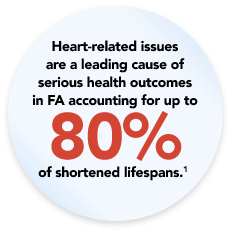
FA is a multisystem genetic disease — involving the nervous system and
heart — in which heart issues are the leading cause of a shortened lifespan.
Though considered rare, FA is the most common form of hereditary ataxia
in the U.S.

FA is caused by changes in the FXN gene, which provides instructions for
the body to make a protein called frataxin. Without enough frataxin, cells
can become energy-starved and vulnerable to damage. This is particularly
important in the heart, brain, and muscles.
Most people can recognize the classic signs and symptoms associated with
FA like movement difficulty and muscle weakness.1 What often goes
unnoticed is damage to the heart.
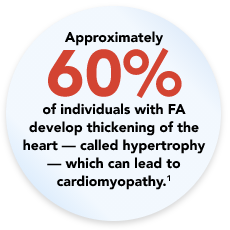
Heart issues associated with FA are particularly dangerous because FA-CM
can begin silently but lead to severe consequences including abnormal
heart rhythms, heart failure, and shortened lifespan.2,3
There are currently no approved treatments that address the underlying
cause of FA-CM. This makes clinical trial research for treating the heart-related
issues in FA crucial.
At Lexeo, we have made this unmet need a top priority and are currently
researching an investigational gene therapy called LX2006 in clinical trials.
How Might Gene Therapy Address FA-CM?
Gene therapy is an investigational approach that aims to address
disease by delivering a working copy of a gene that is missing or not
functioning properly.
In the context of FA, frataxin protein levels are low due to a mutation in
the FXN gene. This can affect organs with high energy demands, such
as the heart, brain, and muscles. Over time, the heart muscle may
become thicker, stiffer, and less flexible, making it more difficult for the
heart to fill and pump blood effectively.
By delivering a working copy of the FXN gene, gene therapy has the
potential to increase frataxin protein levels in the body. This approach
may improve heart function and limit the progression of FA-CM.
What Is LX2006?
LX2006 is an investigational gene therapy designed to deliver a working
copy of the FXN gene to heart cells of individuals with FA-CM.
The goal: help your heart cells produce more of the frataxin protein they need and
potentially improve heart function.
LX2006 is delivered as a one-time intravenous (IV) infusion.
How it works
Think of the FXN gene as a package and LX2006 as the vehicle that
delivers it to heart cells. It is intended to address the underlying cause of
heart problems in FA by potentially:
Increasing frataxin protein levels in the heart cells.
Helping the heart cells make energy more efficiently.
Improving heart function and reducing structural damage to limit progression.
LX2006 has received several special designations from the FDA that
are intended to accelerate the development of drugs that aim to treat
serious or life-threatening diseases, including:
LX2006 is an investigational gene therapy, meaning the safety and efficacy of LX2006 have not been established. LX2006 has not been approved by the U.S. Food and Drug Administration or any other country’s health authority or regulatory agency.
Learn More About Our FA Studies and Trials

SUNRISE-FA 2 is a late-stage clinical trial to evaluate whether the investigational gene therapy, LX2006, may improve heart function and limit the progression of FA-CM.

The CLARITY-FA natural history study is designed for researchers to learn about how heart disease develops and worsens in individuals with FA.

References
- Payne RM. Cardiovascular Research in Friedreich Ataxia. JACC: Basic to Translational Science. 2022;7(12):1267-1283. doi:10.1016/j.jacbts.2022.04.005
- Norrish G, Rance T, Montanes E, et al. Friedreich’s ataxia-associated childhood hypertrophic cardiomyopathy: a national cohort study. Arch Dis Child. 2022;107(5):450-455. doi:10.1136/archdischild-2021-322455
- Hanson E, Sheldon M, Pacheco B, Alkubeysi M, Raizada V. Heart disease in Friedreich’s ataxia. World J Cardiol. 2019;11(1):1-12. doi:10.4330/wjc.v11.i1.1